

The impact of 21 alloy elements such as carbon, titanium, manganese, nickel on steel
Metal materials are a very mysterious discipline. Whether toolmaking itself requires materials or machining parts encounter material problems. If you work in the steel industry, have you ever noticed what exactly those chemical ingredients listed in steel test reports mean? You probably only know that different steel grades have many different chemical compositions and different amounts of elements. In this article, We have compiled and listed 21 chemical elements and their effects on the properties of steel.
#1
Carbon (C)Carbon is the most important element in steel. It is essential for steels that need to be hardened by hardening. The amount of carbon controls the hardness and strength of the material, as well as its response to heat treatment (hardenability).). With the increase of carbon content, the ductility, forging and machinability of the steel will be reduced, and the welding performance will also be reduced.Graph of the internal organization of carbon
#2
Manganese (Mn) Manganese is probably the second most important element after carbon. Manganese acts like carbon, and steel producers use a combination of these two elements to obtain materials with the desired properties. Through its combination with oxygen and sulphur, manganese is necessary for the hot rolling process of steel.
Its existence has the following main functions:
It is a mild deoxidant that acts as a purifying agent to bring sulphur and oxygen from the melt into the slag. It improves ductility and tensile strength, but reduces ductility. It binds with sulfur to form spherical manganese sulfide, which is essential for the good machinability of easily cut steel.Steel usually contains at least 0.30% manganese, but up to 1.5% can be found in some carbon steels.
Manganese also tends to increase the carbon penetration rate during the carbon sequestration process and acts as a mild deoxygenator. However, brittleness occurs when both carbon and manganese levels are too high. Manganese can form manganese sulfide (MnS) with sulfur, which is beneficial for machining. At the same time, it can counteract the brittleness caused by sulfur, which is conducive to the surface cleanliness of carbon steel.
For welding, the ratio of manganese to sulfur should be at least 10: 1. Manganese content below 0.30% may promote pores and cracks within weldsA content greater than 0.80% may also lead to cracks. Steels with low manganese sulfur ratios may contain sulfur in the form of iron sulfide (FeS), which can cause weld cracking.
#3
Phosphorus (P)Although it can improve the tensile strength of steel and improve machinability, it is often considered an unwanted impure due to its brittle effect.
The effect of phosphorus on steel varies with concentration. Due to its harmful properties, the maximum content of phosphorus in high grade steel is between 0.03% and 0.05%.In low-alloy high strength steels, up to 0.10% phosphorus increases strength and improves the corrosion resistance of the steel. When the content in the hardened steel is too high, the probability of brittleness increases. Although strength and hardness improve, ductility and resilience decline.
Phosphorus improves machinability of easy-to-cut steels, but if the phosphorus content exceeds 0.04%, welding brittleness and / or cracks may occur. Phosphorus also affects the thickness of the zinc layer when galvanized.
#4
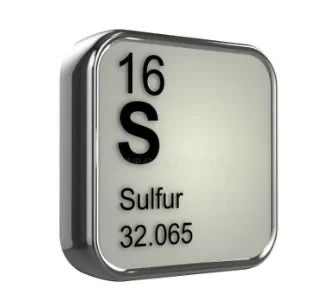
Sulfur (S)Sulfur is often considered an impure substance, and when the sulfur content in steel is high and manganese content is low, it can adversely affect the impact performance. Sulfur improves machinability, but reduces horizontal ductility and gap impact toughness, and has less impact on longitudinal mechanical properties. Sulfur content in steel is limited to 0.05 per cent, but can be added up to 0.35 per cent in easy-to-cut steel, while manganese content is increased to offset any adverse effects, as 0.1 to 0.30 per cent sulphur alloy addition improves the machinability of steel. This type of steel may be called "resulfided" or "easy to cut" steel. Easily cut steels are added with sulphur to improve machinability, usually up to 0.35 percent.
Although sulphur has a negative effect on steel at some stages, sulphur content below 0.05% has a positive effect on steel grade.
#5
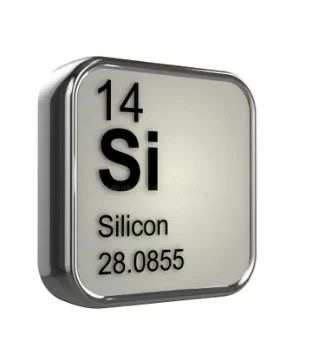
Silicon (Si) Silicon is one of the main deoxidants of steel. Silicon helps remove oxygen bubbles from molten steel. It is the most commonly used element in the production of semi-deoxysed and fully deoxysed steel, usually in a content of less than 0.40%. When used as deoxysing agent, rolled steel is usually contained in a small amount (0.20%). In steel castings, however, it usually contains between 0.35% and 1.00%.
Silicon dissolves in iron and tends to strengthen it. Some filling metals may contain up to 1% silicon to provide better cleaning and deoxygenation when welded on contaminated surfaces.When these filling metals are used for welding on clean surfaces, the resulting weld metal strength will be significantly improved.Silicon increases strength and hardness, but to a lesser extent than manganese. The resulting reduced ductility may cause cracking problems.
In the case of galvanization, steel containing more than 0.04% silicon will greatly affect the thickness and appearance of the galvanized layer. This will result in a thick coating consisting mainly of a zinc-iron alloy with a dark, glossy appearance on the surface. However, it provides the same corrosion protection as the luminous galvanized coating of pure zinc on the outer layer.
#6
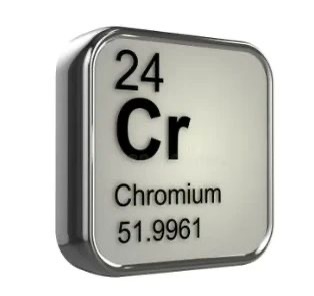
Chromium (Cr)Chromium is a powerful alloying element in steel. Cr exists in small amounts in some structural steels. It is mainly used to improve the ductility of steel and to increase corrosion resistance as well as the submitting strength of steel. Therefore, it is often used in combination with nickel and copper.Stainless steel may contain more than 12% chromium. The famous "18-8" stainless steel contains 8% nickel and 18% chromium.
When the chromium content in steel exceeds 1.1%, a surface layer is formed that helps protect the steel from oxidation.
#7
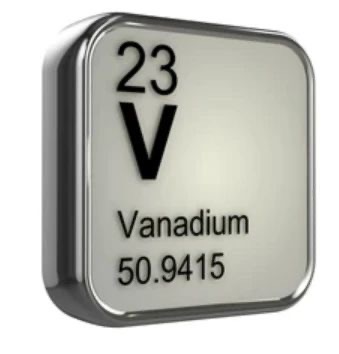
Vanadium (V)The action of vanadium is similar to that of manganese, molybdenum and niobium. When used with other alloying elements, it limits grain growth, refines grain size, improves ductility, fracture toughness and shock resistance. Improve heat softening, fatigue stress and wear resistance. When the content is greater than 0.05%, a tendency to brittle may occur during heat stress elimination treatment.
Vanadium, together with other alloying elements, is used in nitricization, heat resistance, tooling and spring steel.
#8
Tungsten (W)It is used together with chromium, vanadium, molybdenum or manganese to produce high-speed steel for cutting tools. Tungsten steel is known as "red hard," i.e. it is still hard enough to be cut after it becomes red hot. After heat treatment, the steel maintains its hardness at high temperatures and is especially suitable for use in cutting tools.
Tungsten in the form of tungsten carbide:Even under red heat can give steel a high hardness. Promote fine crystal formation resistance to heat promote high temperature strength
#9
Molybdenum (Mo)Molybdenum has a similar effect to manganese and vanadium and is often used in combination with one or both of them.This element is a strong carbide formation agent and is usually found in less than 1% of alloy steels.It improves ductility and high temperature strength, while improving corrosion resistance and increasing worming strength. It is added to stainless steel to increase its corrosion resistance and is also used in high speed tool steel.
#10
Cobalt (Co)Cobalt improves high temperature strength and magnetic conductivity.Increase hardness while allowing for a higher heating temperature (during heat treatment). Strengthen the individual roles of other elements in more complex steels. Cobalt is not a carbide formation agent, but adding cobalt to an alloy results in higher achievable hardness and higher red heat hardness.
#11
Nickel (Ni)In addition to being beneficial to the corrosion resistance of the steel, the addition of nickel can also improve the ductility. Nickel enhances the low temperature properties of the material by improving fracture toughness. The presence of this element does not reduce the welding ability of the steel. Nickel greatly improves the gap toughness of steel.
Nickel is often used in combination with other alloying elements, especially chromium and molybdenum. It is a key component of stainless steel, but its content is lower in carbon steel. Stainless steel contains 8% to 14% nickel.
Another reason for adding nickel to the alloy was its ability to create a brighter part of Damascus steel.
#12
Copper (Cu)Copper is another major corrosion-resistant element. It also has a small effect on ductility.Usually not less than 0.20%, it is the main anti-corrosion ingredient in steel grades such as A242 and A441.
Most commonly used as a residue in steel, copper is also added to produce precipitation hardening properties and improve corrosion resistance.
#13
Aluminum (Al) Aluminum is one of the most important deoxidants in materials, in small amounts, while helping to form a finer grain structure and improve the toughness of steel grades. It is usually used with silicon to obtain semi-deoxygenated or fully deoxygenated steel.
We also share in detail about aluminum alloy materials, and if you are interested, you can click to view the original article.
#14
Titanium (Ti)Titanium is used to control grain growth, which improves toughness. The sulphide binder was also transformed from a thin to a ball shape, improving strength and corrosion resistance as well as toughness and ductility.
Titanium is a very strong, very light metal that can be used alone or alloyed with steel. It is added to steel to give it high temperature and high strength. Modern jet engines use titanium steel.
Prevent the depletion of local chromium in stainless steel during prolonged heating prevent the formation of austenite in high chrome steel reduce the mastodic hardness and hardness of medium chrome steel
We have also discussed the topic of titanium alloy in depth in previous periods, please click here to see previous periods
#15
Niobium (Nb)Niobium is a key grain refining element and a strengthening element in steel production. Niobium is a strong carbid-forming agent, forming very hard, very small simple carbides. Improve ductility, hardness, wear resistance and corrosion resistance. At the same time, refine the grain structure. Formerly known as niobium.
#16
Boron (B)The most important role and purpose of boron in steel is to significantly improve hardness.
The biggest advantage of boron is that a small amount is added to achieve the same hardenability effect that other elements require large amounts to achieve. The typical range in steel alloys is 0.005% to 0.003%.
Boron, as a substitute for other elements, is added to improve the hardenability of medium carbon steel.The cutting performance of high-speed steel has been improved, but at the cost of forging qualityExcessive boron content may also reduce ductility, toughness and lead to brittleness. The percentage of carbon in steel also plays a role in the ductility effect of boron. As the influence of boron on ductility increases, the content of carbon should be reduced accordingly.
When boron is added to steel, precautions must be taken to ensure that it does not react with oxygen or nitrogen, as the combination of boron with either of these two elements renders boron ineffective.
#17
Lead (Pb)A small amount of lead is added to improve machinability, up to 0.30 percent. As long as it is distributed evenly, it has little effect on the physical properties of the steel and, contrary to popular belief, it does not affect welding ability.
#18
Zirconium (Zr)Add zirconium to the steel to change the shape of the inclusions. It is often added to low-alloy, low-carbon steels. Resilience and ductility improve when the shape changes from a thin to a spherical shape.
#19
Tantalum (Ta)It is very similar to niobium (Nb) in chemical properties and therefore has a similar effect on the alloy - forming very hard, very small simple carbides. Improve ductility, hardness, wear resistance and corrosion resistance. At the same time, refine the crystals.
#20
Nitrogen (N)Nitrogen's role in alloys is very similar to that of carbon. Nitrogen is substituted for carbon in small amounts (or even large amounts under modern technology) to increase hardness. Obviously, nitrogen forms nitrides, not carbides. INFI contains nitrogen, and a few others, of which Sandvik is the champion, with 3% nitrogen in the alloy, completely replacing carbon. Unfortunately, tool manufacturers can't get it. Because nitrogen has a smaller tendency to form chromium nitrides than carbon to form a chromium carbide, its presence improves corrosion resistance and retains more free chromium in the alloy. Since nitrogen is less reactive when forming nitrides, it can be used to increase hardness without increasing the size and volume of the carbides,Example Sandvik 14C28N steel.
#21
Selenium (se)Usually not popular in tool steel. Added to improve machinability. Similar to sulfur, it belongs to the same sulfur family element.
All of the above chemical elements and effects are related to steel. So, if you're in the steel industry, you should know this.
There are also some other small, rare metal elements that we did not list above.
POST TIME: 2025-03-30